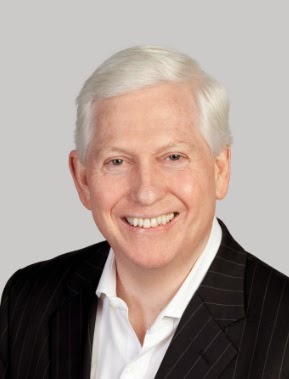
Helping you make wise decisions in your life

When did you last regret a decision you made? Can you envision where you would be today if you had made that decision differently? Imagine what you could achieve in your life, in your business and even in the world if you could always think, decide and act with true wisdom. The good news is, you can. With the right tools and techniques you can learn how to make decisions that have the most positive impact on all concerned.

Showing posts with label Wisdom definitions. Show all posts

Tuesday, 3 March 2009

Phronetic Leadership


Frenetic or Phronetic?

Phronesis (Prudence, Practical Wisdom):
* A virtuous habit of making decisions and taking actions that serve the common good.
* A capability to find a “right answer” in particular context.
* Deliberate reasoning and improvisation which synthesizes particulars and universals.
* Can be acquired only through high quality direct experiences.

Monday, 2 March 2009

Coaching for Wisdom


Coaching is an intentional dialogue between a leader in an organization and a coach who uses a wide variety of behavioural techniques and methods to shape a journey from one place of identity and meaning to another place, from which the leader can more wisely manage their own life and the life of the organizations they serve.

I use an intentional process in coaching sessions to elicit wisdom-thinking, wisdom-decision making and wisdom-performance, which I call the “FORMat” model of coaching for wisdom.

The highest purpose for coaching in troubled times must be to make the leader’s implicit wisdom resources more explicit and to help them shape those resources into a personal “compass” to make wise decisions in the service of a common good!

Enhancing Wisdom


There are three ways in which wisdom-performance may be enhanced:
(1) Life experience
(2) Teaching skills and ways of thinking, and
(3) Short-term interventions.

Coaching is a deliberate intervention to move the client along “the path of progressive development” toward some higher level of functioning as a person, and particularly as a leader, for the achievement of agreed goals. Coaching questions intentionally activate the individual’s conceptions of personal wisdom depending on their developmental preparedness, their level of engagement with the coach, and the particular outcomes expected of the coaching assignment.

The Berlin Wisdom Paradigm


At the Max Planck Institute for Human Development and Education in Berlin, wisdom is defined as “expert-level knowledge in the fundamental pragmatics of life”. They described five dimensions of wisdom-related knowledge:
(1) rich factual knowledge: general and specific knowledge about the conditions of life and its variations;
(2) rich procedural knowledge: general and specific knowledge about strategies of judgment and advice concerning matters of life;
(3) life-span contextualism: knowledge about the contents of life and their temporal (developmental) relations;
(4) value relativism: knowledge about differences in values, goals, and priorities; and
(5) uncertainty: knowledge about the relative indeterminancy and unpredictability of life and ways to manage it.

Wisdom as Personality


Who is wise? Recognizing wisdom in others presumes that there are characteristics that reside within the person.

Associate Professor Monica Ardelt (2003) measures wisdom by assessing the attributes and personality characteristics of wise individuals. She identifies the simultaneous presence of three dimensions of personality as both necessary and sufficient for a person to be considered wise:
(1) the cognitive dimension: a desire to know the truth and attain a deeper understanding of life, including knowledge and acceptance of the positive and negative aspects of human nature, of the inherent limits of knowledge, and of life’s unpredictability and uncertainties;
(2) the reflective component: self-examination, self-awareness, self-insight and the ability to look at phenomena and events from different perspectives; and
(3) the affective component: sympathetic and compassionate love for others.

Wisdom as Balance


Wisdom decision making is all about balance, in knowing what to do on what task in what situation and against what timeframe. From the PACE (Psychology of Abilities, Competencies, and Expertise) Center at Yale University, Bob Sternberg (2005) has defined wisdom as “in large part a decision to use one’s intelligence, creativity, and experience for a common good”.

Wise leadership involves synthesizing intelligence (academic, and practical/tacit), creativity (skills and attitudes), and wisdom (balancing interests and responses, moderated by values, in pursuit of a common good) to achieve wise outcomes for all possible stakeholders.

Wisdom as a Pathway


Richard Kilburg (2006) makes the claim that wisdom in leadership, particularly in executives of large commercial and government enterprises, is a special case. Taking a lead from the Berlin wisdom paradigm he defines executive wisdom as “an expert system in the fundamental pragmatics of organized human life” (Kilburg, 2006).

Executive wisdom emerges as a result of discernment (a combination of rational and intuitive perception), decision making (time frame, perspective and planning), and action (implementation) linked dynamically and interactively with each other through experience, feedback, and evaluation.

Wise Up


What makes you wise is how well you demonstrate these five criteria in responding to life’s problems:
* General Knowledge: Both academic and practical “smarts”. What do you really know about life?
* Strategic Knowledge: Can you suggest many different ways of analysing or judging life problems? How much operational knowledge do you have about life?
* Contexts: can you take the “long view” in relation to yours or someone else’s life? How well can you interpret the developmental and social contexts of life?
* Values: It’s too easy to impose your own values on what seems the “right” thing to do. But can you see life from the perspective of other people’s values and preferences, and can you make allowances for that?
* Uncertainty: can you accept that life is inherently “messy”? There are no perfect solutions. How well do you tolerate ambiguity in your own life and the lives of those around you?

The March of Folly


“Wisdom”, wrote the famed American Historian, Barbara Tuchman, is “the exercise of judgment acting on experience, common sense and available information” (1984). The opposite of wisdom is “folly”.

Folly in leadership is:
* The pursuit of counter-productive policy. Mankind in the form of Troy’s citizens is addicted to pursuing policy contrary to self-interest.
* Denial of a feasible, alternative course of action. The feasible alternative – to burn the Horse – is always open.
* Relying on group policy-making. The reasoned decisions of an individual leader are often no match for the “groupthink” of a collectively-determined policy.
* ”Wooden-headedness”. Refusing to benefit from experience, and assessing a situation in terms of preconceived fixed notions while ignoring or rejecting any contrary signs.